
- All
- Product Name
- Product Keyword
- Product Model
- Product Summary
- Product Description
- Multi Field Search

Views: 15 Author: Site Editor Publish Time: 2026-02-24 Origin: Site

I. Improper Operation (Non-Claimable Scenarios)
1. Mushrooming&Chipping (Excessive Heat) (Refer to the diagram ) 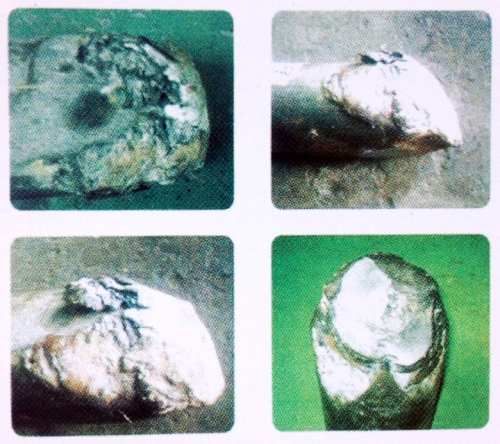

When breaking high-hardness rock, the kinetic energy must be released through the rock. If the rock doesn't break, the energy converts into heat, raising the chisel tip temperature to over 400℃. This leads to decarburization and softening, causing "mushrooming" or chipping.
Correct Operation: Limit striking at a single point to under 30 seconds. If unsuccessful, find a new striking point. Use water for cooling on extremely hard rock.
Policy: Claims for heat-related deformation are not accepted. To extend chisel service life, proper operation and regular maintenance are essential.
1. Blank Firing (Type I & II) (Refer to the diagram )

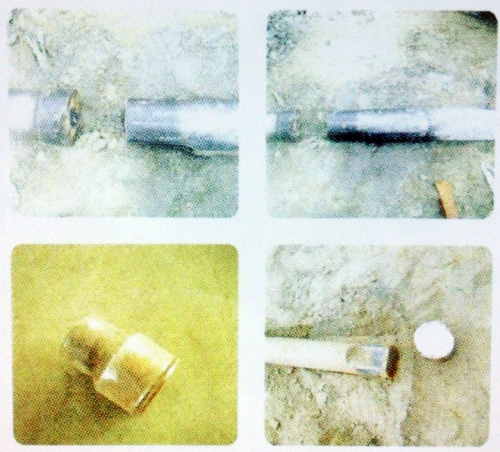
Striking without firm contact with the target (e.g., sliding or thin concrete) causes the piston to hit the chisel with full force without energy transfer. This leads to:
Shank Damage: Violent collision between the flat pins and the chisel shank, causing chipping at the top of the shank. These chips can further damage the piston, cylinder, and bushings.
Shank Breakage: Severe blank firing or poor lubrication can lead to a complete snap at the flat pin slot.
Policy: No compensation is provided for damage caused by blank firing. To extend chisel service life, proper operation and regular maintenance are essential.
2. Prying & Leverage (Type I & II) (Refer to the diagram )

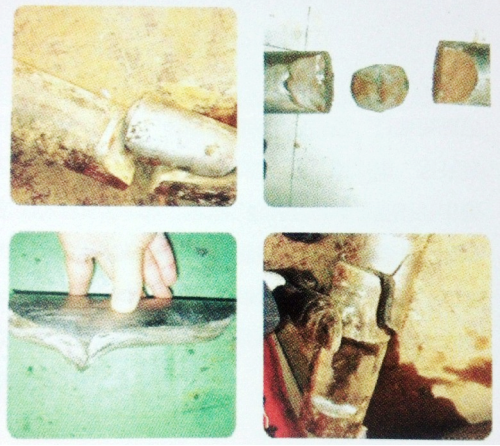
Chisels are heat-treated for hardness and are brittle. Using them as a lever, striking at an angle, or pulling with the excavator arm creates massive side stress.
Symptoms: Fracture surface is perpendicular (90°) to the rod, often with a semi-circular "fatigue start point" or irregular triangular chips near the guide sleeve.
Policy: Breakage due to side stress or leverage is not claimable. To extend chisel service life, proper operation and regular maintenance are essential. To extend chisel service life, proper operation and regular maintenance are essential.
3. Off-center Striking (Refer to the diagram )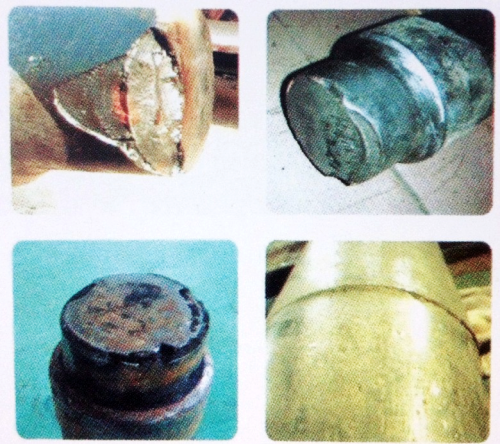
Operating with worn bushings or a damaged piston causes misalignment. The piston strikes the chisel face at an angle, concentrating high-frequency energy on a small edge area.
Symptoms: Chipping or fragmentation on the edges of the chisel’s striking face.
Policy: Damage due to delayed maintenance of internal parts is not claimable. To extend chisel service life, proper operation and regular maintenance are essential.
4. Tip Breakage (New Chisel Warm-up) (Refer to the diagram )

New chisels are sharp and brittle. They require a "warm-up" period (low power and frequency on soft rock) to adapt to the working environment.
Policy: Breaking the tip on hard rock or rebar without warm-up is not covered. To extend chisel service life, proper operation and regular maintenance are essential.
5. Surface Contamination (Refer to the diagram ) 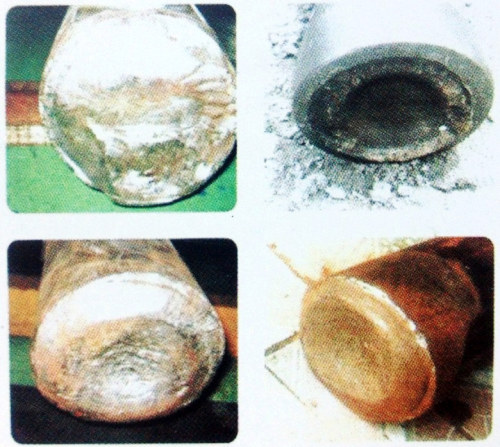
Foreign objects or debris between the piston and the chisel striking face will cause micro-cracks that eventually lead to surface failure.
Policy: Users must maintain a clean working environment. Claims for failure due to impurities are not accepted. To extend chisel service life, proper operation and regular maintenance are essential.
II. Material & Quality Issues (Claimable Scenarios)
1. Material Defects (Refer to the diagram ) 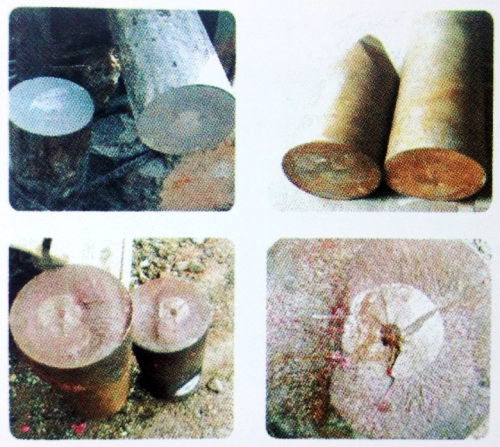
Internal air bubbles (poor vacuum degassing) or impurities in the raw steel.
Symptoms: A very clean, flat fracture surface (like a cut) with a visible "defect point" at the center of a radial crack pattern.
Policy: Compensation is provided for material defects. To extend chisel service life, proper operation and regular maintenance are essential.
 2. Bending (Insufficient Heat Treatment)(Refer to the diagram )
If a chisel bends rather than breaks under side stress, it indicates insufficient hardness but high toughness.
Policy: Bending caused by improper heat treatment is claimable. To extend chisel service life, proper operation and regular maintenance are essential.
3. Longitudinal Cracking (Refer to the diagram ) 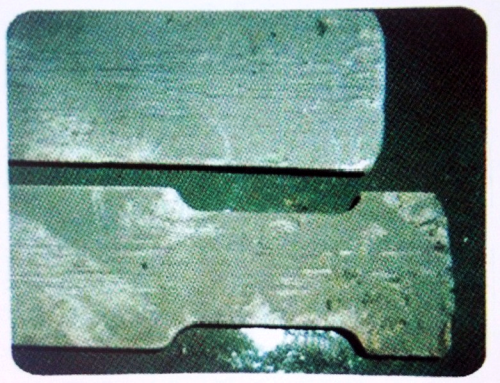
Significant quality issues with low-grade raw materials or insufficient forging compression ratios.
Policy: SLYM uses high-quality alloy steel to prevent this. These cases are eligible for compensation. To extend chisel service life, proper operation and regular maintenance are essential.
For technical support or warranty evaluation, contact SLYM Machinery's service team.
